
CAB Network March 2026 - Prisons
Christian Action Brighton Network Evening: Responding to Prisons and Prisoners
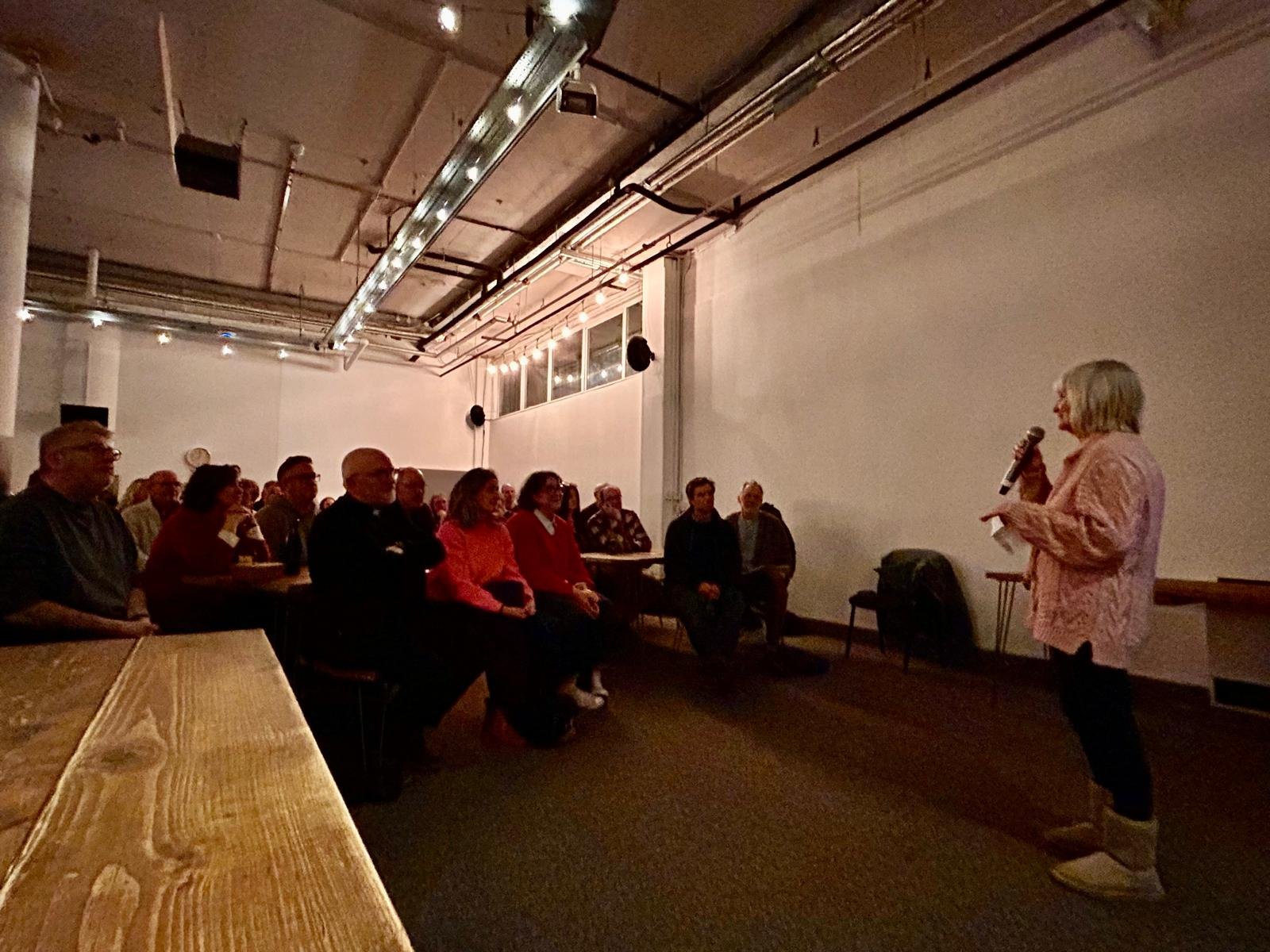
On Thursday 12th March 2026, we gathered as part of the Christian Action Brighton Network for an evening focused on the church’s response to prisons and prisoners. It was a significant and, at times, challenging conversation—one that brought together people from across denominations who share a desire to serve our city in Jesus’ name.

(Guest speaker Rev. Dr Tim Edge addresses the CAB network)
The purpose of this network has always been to connect churches, charities, and individuals engaged in social action, breaking down silos and working together more effectively. We have had great success with this in the recent past in the areas of food and homelessness support. This evening highlighted how vital that unity is when engaging with an area often overlooked in church life: prison ministry.
A Call to Remember the Forgotten
While Scripture frequently calls us to care for widows and orphans, the call to remember those in prison can be less visible in practice. Yet the need is urgent. We heard clearly that the current justice system is under significant strain, and that this presents both a challenge and an opportunity for the Church to respond with compassion, creativity, and commitment.
The example of F.B. Mayer, a 19th-century pastor who worked tirelessly to support ex-prisoners with practical help such as employment, offered a powerful reminder: effective ministry must be holistic. It is not enough to care spiritually without also addressing the practical realities people face on release.
Insights from Experience and Research
Our main speaker, Rev Dr Tim Edge, brought deep expertise in prison chaplaincy, helping us understand both the structures of the system and the human realities within it. We were also grateful to Susan Jones from Portsmouth, who shared her personal experience of the proven and fruitful Sycamore Tree restorative justice programme. Recently, support for this initiative was sadly (and inexplicably, given its profound results,) withdrawn by central government. Her testimony gave a moving picture of how reconciliation and healing can take root even in the most difficult contexts.
One of the most striking themes of the evening was the impact of prison volunteering - not only on prisoners, but on volunteers themselves. Those who serve in prisons often find their faith stretched and deepened. They encounter raw, complex human situations that demand a theology grounded not in abstraction, but in the core truths of the gospel: love, forgiveness, grace, and the character of God as a perfect parent.
This raises an important question for the wider Church. Many volunteers experience a disconnect between what they encounter in prisons and what is typically discussed in church settings. How can we better listen to and support those serving in these environments?



Understanding the Landscape
The discussion highlighted a clear need to map what is already happening across our city and beyond. There are encouraging examples:
Partnerships with probation services creating safe, relational spaces for those on probation
Initiatives supporting literacy among prisoners, sometimes led by prisoners themselves
Resources like the Welcome Directory helping individuals reconnect with community after release
At the same time, significant challenges remain. Access to prisons is often limited, safeguarding requirements are essential but demanding, and supporting individuals after release—particularly in connecting them with church communities—can be difficult.
There was also a helpful distinction made between working with the system and working with individuals. Both matter, but they require different approaches. Alongside direct support, there is a place for engagement with the wider structures—probation services, courts, and policymakers.
The Role of the Church
A recurring theme was the importance of community. Churches are uniquely placed to offer belonging, stability, and hope—but this requires intentionality. Supporting those on probation or leaving prison involves practical help, relational commitment, and spiritual care.
We also reflected on the importance of early intervention. Issues such as illiteracy and lack of opportunity often begin long before someone enters the justice system. Addressing these root causes is part of a long-term, preventative response.
Moving Forward
A key suggestion emerging from the evening was the need to develop a more intentional, networked approach to prison ministry across Brighton and the surrounding area. Rather than isolated efforts, there is a clear opportunity to strengthen collaboration between churches, charities, and existing initiatives—sharing knowledge, building relationships, and coordinating practical support.
One important and accessible first step is wider local participation in the Welcome Directory. By contributing to and promoting this national resource, we can help ensure that individuals leaving prison are more easily connected to supportive Christian communities and services in our area. This offers a tangible way for churches of all sizes to be involved in meaningful, joined-up support.
As we closed, three simple invitations were offered:
Reflect on what stood out and what God might be saying
Connect with others you met and build on those relationships
Act by exploring how you or your church might take a next step
Whether that is volunteering, partnering with existing initiatives, contributing to the Welcome Directory, or helping shape a more coordinated local response, every step matters.
This evening reminded us that prison ministry is not a niche concern; it is central to the gospel’s call to love those on the margins. As a network, we are committed to continuing this conversation and discerning together how we can respond faithfully in Brighton and beyond.
Tim Jones
Convenor, Christian Action Brighton